
Beaver Leveling Pipes & Beaver Control Solutions
Control Water Levels. Protect Property. Work With Nature.
Beavers can cause flooding, tree damage, pond overflow, creek blockages, and dam failures. At Nature & Wildlife Solutions, we help landowners understand the best way to manage beaver activity through virtual consultations nationwide and local beaver removal and prevention services within the Missouri service area.
Whether you need help identifying the problem, choosing a water-level control option, or deciding if removal is necessary, we can help you create a practical plan.
Schedule a Beaver Consultation Today
Want to dive a little deeper? Read our blog post on Beavers in Missouri.
Beaver Leveling Pipes: How do they work?
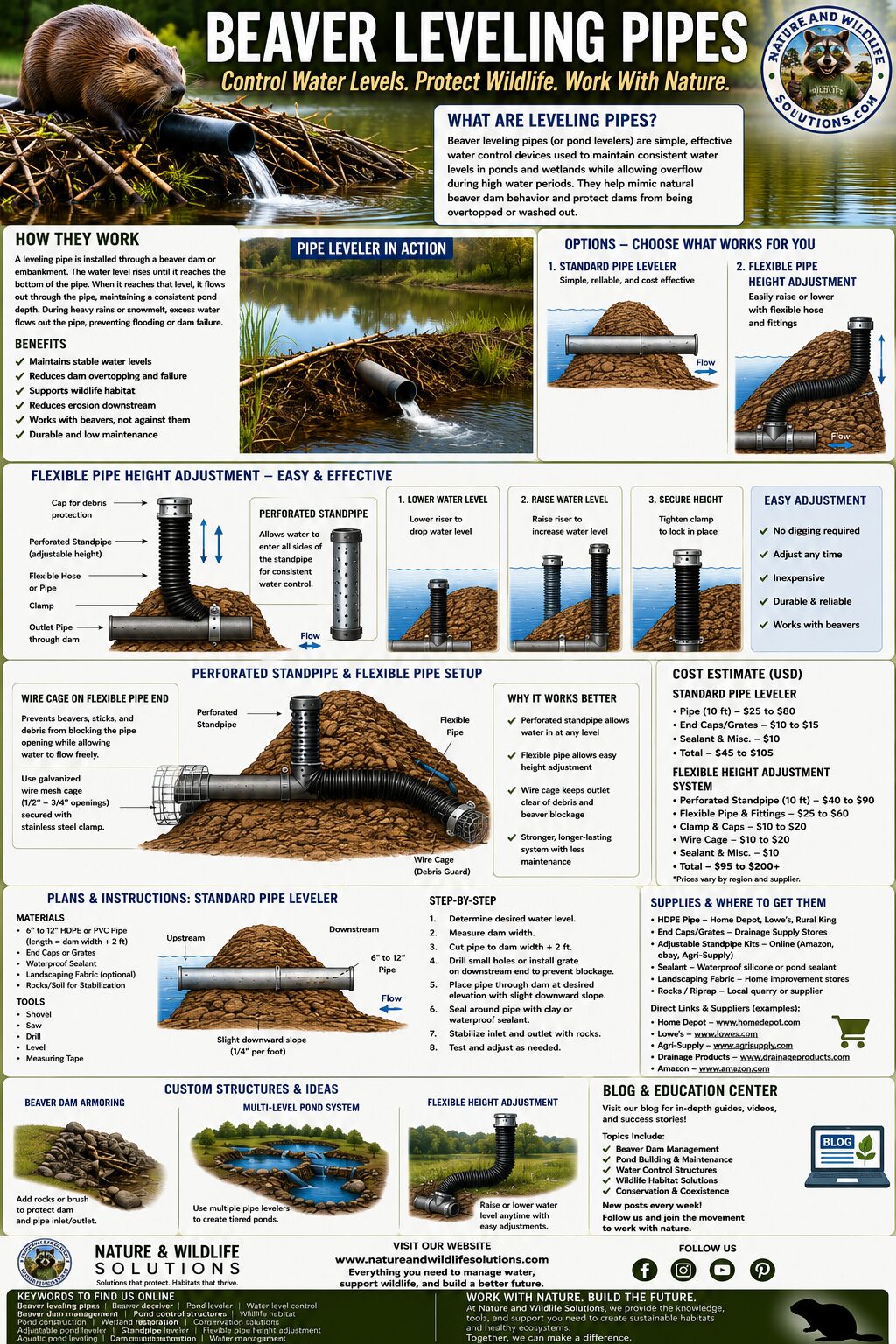
Learn how beaver leveling pipes and pond levelers help control water levels, reduce flooding, protect property, and manage beaver activity while preserving valuable wetland habitat.
What Are Beaver Leveling Pipes?
Beaver leveling pipes, also called pond levelers or beaver pond levelers, are water-control devices used to maintain consistent water levels in ponds, wetlands, creeks, and dammed areas.
They allow overflow water to pass through a beaver dam or embankment while helping prevent sudden flooding, overtopping, erosion, and dam failure. When installed correctly, they can reduce flooding while still allowing beavers and wetland habitat to remain in place.
How Beaver Leveling Pipes Work
A leveling pipe is installed through a beaver dam or embankment. Water enters the pipe when the pond or wetland reaches the selected level. Once the water reaches that level, it flows out through the pipe, helping maintain a steady depth.
During heavy rain or snowmelt, excess water flows out through the system, which helps prevent flooding and damage.
Benefits
- Maintains stable water levels
- Reduces dam overtopping and failure
- Supports wildlife habitat
- Reduces downstream erosion
- Works with beavers, not always against them
- Durable and low maintenance
- Helps protect ponds, wetlands, roads, trails, culverts, and private property
Beaver Leveling Pipe Options
Standard Pipe Leveler
A standard pipe leveler is simple, reliable, and cost-effective. It is often used where a fixed water level is acceptable and the goal is to move excess water through the dam.
Flexible Pipe Height Adjustment
A flexible height-adjustment system allows easier water-level control. This option may include a flexible hose or pipe, adjustable standpipe, clamp system, and debris protection.
This setup makes it easier to raise or lower the water level without rebuilding the dam or pipe system.
Flexible Height Adjustment System
A flexible beaver pipe system may include:
Perforated standpipe
Flexible hose or pipe
Clamp
Outlet pipe through the dam
Debris protection cap
Wire cage or guard on the pipe end
The perforated standpipe allows water to enter from multiple levels. The flexible pipe allows the height to be adjusted as needed. Once the desired height is set, the pipe can be secured in place.
Why It Works Better
- Allows water to enter at the selected level
- Makes height adjustments easier
- Helps keep debris and beavers from blocking the pipe
- Can reduce maintenance
- May provide stronger, longer-lasting water control
Beaver Dam Armoring & Prevention
In some situations, a leveling pipe alone is not enough. Rocks, brush, wire protection, or other armoring may be needed to protect the dam, pipe inlet, outlet, culvert, or shoreline.
Beaver prevention may include:
- Dam assessment
- Water-level control planning
- Culvert protection
- Tree protection
- Pond and wetland management
- Debris guard installation
- Long-term beaver activity monitoring
- Habitat modification recommendations
Do You Need Beaver Removal or a Water-Level Control Plan?
Not every beaver problem requires removal. In some locations, water-level control may be the best option. In other cases, active trapping and removal may be necessary to stop flooding, protect infrastructure, or prevent continued property damage.
Common signs of a beaver problem include:
Creek or pond flooding
Freshly cut trees
Dammed culverts
Water backing up onto roads, trails, fields, or yards
Damaged landscaping or timber
Rising pond or wetland levels
New beaver lodges, slides, trails, or chew marks
Nature & Wildlife Solutions offers virtual beaver consultations nationwide, including property assessment, dam and flooding review, water-control recommendations, and long-term management planning. Their website lists beaver consultation options and pricing, including a property assessment and full beaver management plan.
For local Missouri clients, Nature & Wildlife Solutions also provides beaver trapping and prevention within 15 miles of Eureka, Missouri.
Virtual Beaver Consultation
If you are outside the local Missouri service area, a virtual consultation can help you understand what is happening on your property and what steps to take next.
Schedule a Virtual Beaver Consultation
We help property owners answer questions like:
Why is my creek flooding?
How do I stop beavers from damming my property?
Why are trees being cut down overnight?
Do I need beaver removal or prevention?
Can a leveling pipe help control my water level?
Request Missouri Beaver Help
Contact Nature & Wildlife Solutions
Protect your land, water, trees, and structures before beaver damage gets worse.
Email: jerryswildlifehelp@gmail.com
Text or call: 636-399-4562
Nature & Wildlife Solutions says they primarily communicate by email and text for convenience and quick response.