
House Mouse
Introduction
The House Mouse (Mus musculus) is one of the most common rodents worldwide and a frequent pest in Midwest homes, farms, and businesses, including throughout Missouri. Highly adaptable and fast-breeding, house mice thrive in human environments where food and shelter are abundant. While small in size, their potential to contaminate food, damage property, and spread disease makes them a serious concern for property owners.
Looking for recommendations for traps or bait? See our resource page.
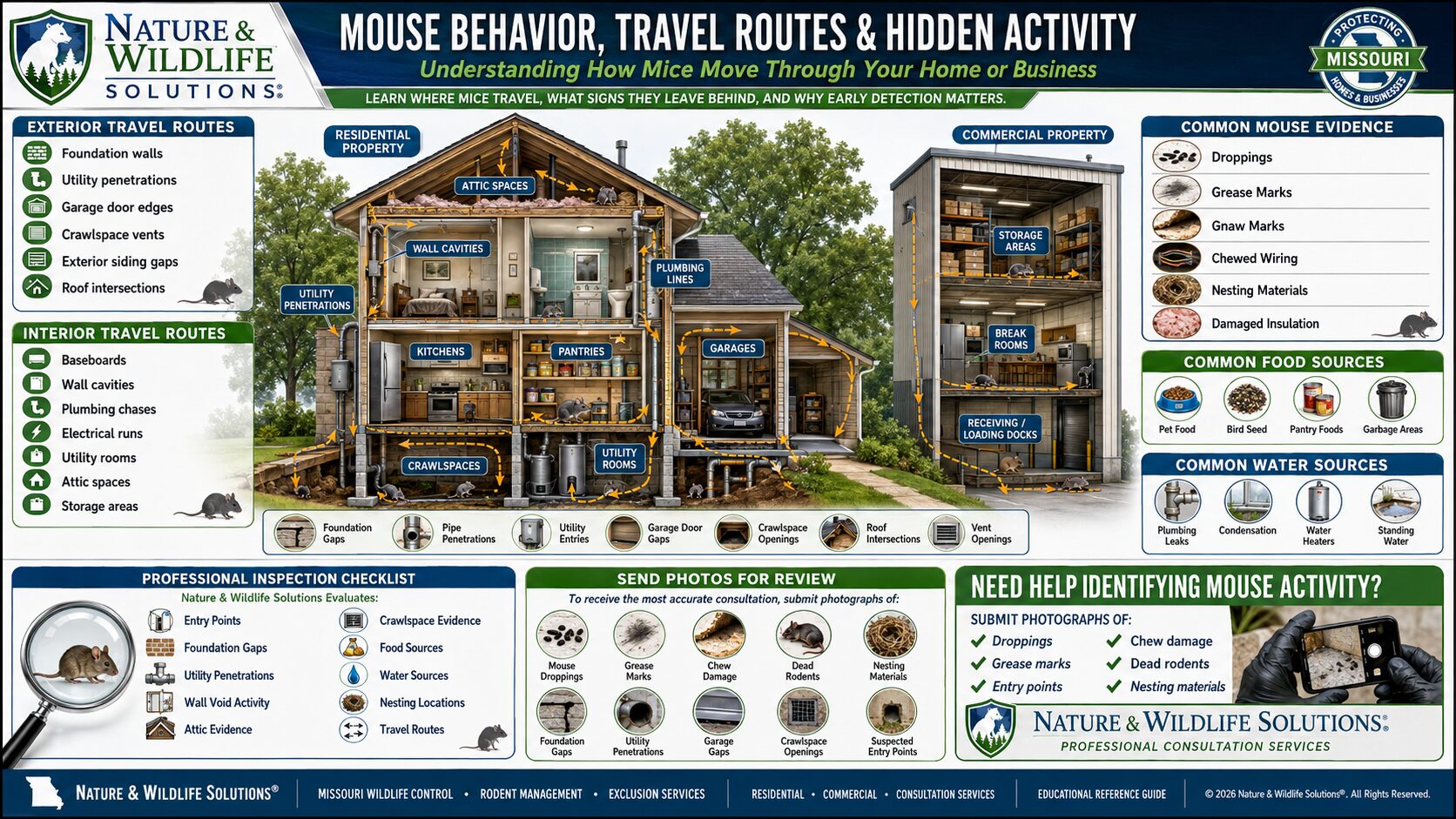
Think You Have Mice? Follow Their Trail Before the Damage Gets Worse
Mice rarely stay in one place. They travel through attics, crawlspaces, wall voids, garages, kitchens, and utility areas while searching for food, water, and nesting sites. This guide shows the most common travel routes, entry points, and warning signs that indicate mouse activity in homes and commercial buildings.
Early detection can prevent costly damage to wiring, insulation, stored goods, and structural components. Look for droppings, grease marks, gnawing, nesting materials, and other signs highlighted in this chart to identify potential infestations before they grow.
Not sure what you're seeing? Schedule a Virtual Rodent Consultation with Nature & Wildlife Solutions. Upload photos of droppings, damage, entry points, or nesting materials, and receive professional guidance on identification, prevention, and next steps.
Located in Missouri? Our wildlife specialists provide comprehensive mouse removal, exclusion, and prevention services to stop current infestations and help keep rodents from returning. Contact us today for a professional inspection and customized protection plan.
Looking for recommendations for traps or bait? See our resource page.
Mouse Activity, Bait Placement & Prevention: A Complete Guide to Protecting Your Home or Business
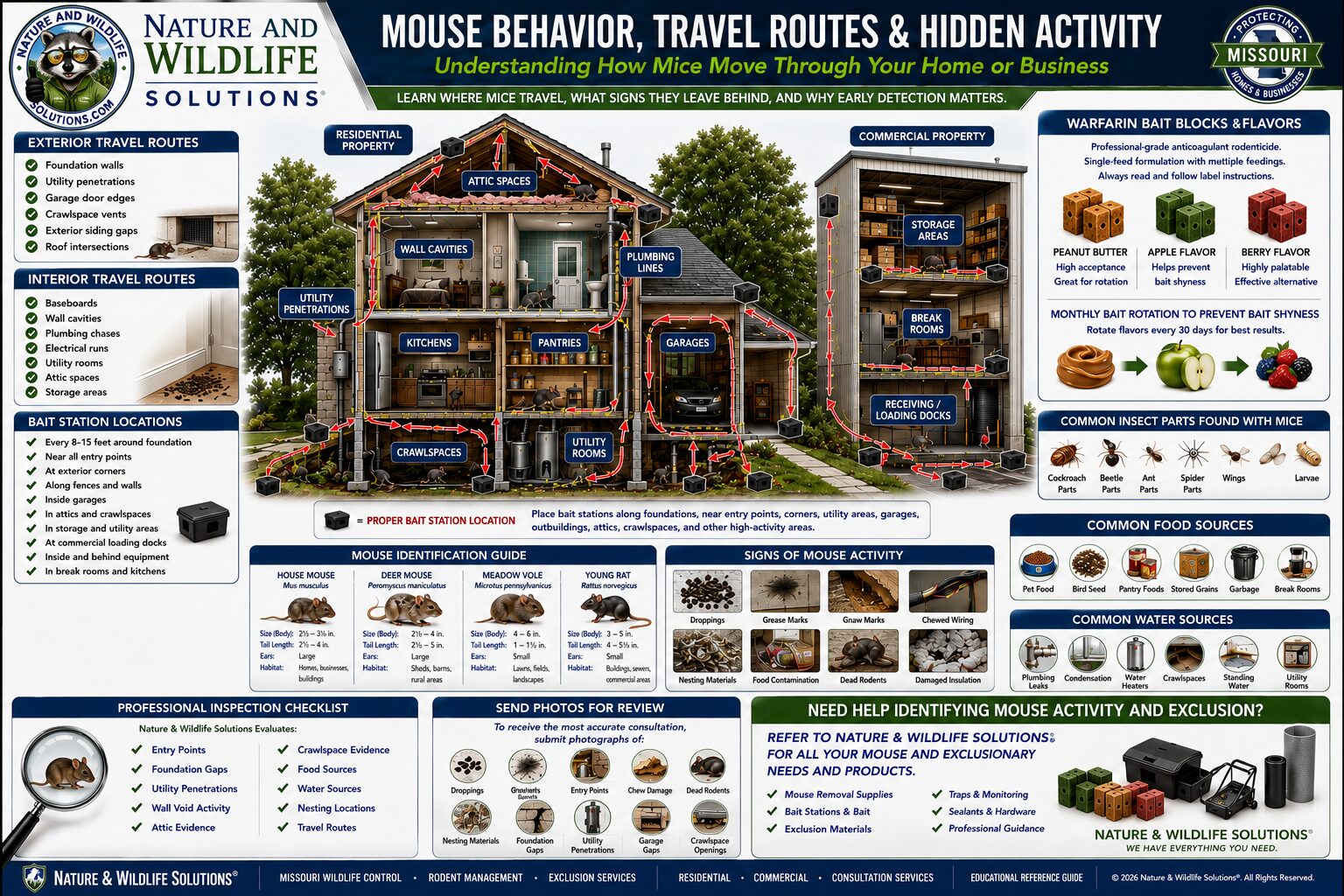
Mice follow predictable travel routes through walls, attics, crawlspaces, garages, storage areas, and utility spaces—often remaining hidden until damage becomes extensive. This detailed guide illustrates where mice travel, where bait stations are most effective, and the common signs of rodent activity that property owners should never ignore.
Understanding mouse behavior is the first step toward successful prevention and control. From droppings and gnaw marks to food contamination and damaged insulation, early identification can help prevent costly repairs and reduce health risks associated with rodent infestations.
Not sure if you have mice or where they're entering? Schedule a Virtual Rodent Consultation with Nature & Wildlife Solutions. Our experts will review your photos, identify signs of activity, locate likely entry points, and provide a customized action plan for removal, exclusion, and prevention.
Missouri property owners: We provide professional mouse removal, exclusion, bait station installation, and long-term rodent prevention services for residential and commercial properties throughout Missouri. Our team can identify hidden activity, seal entry points, and implement proven solutions to keep rodents out for good.
Looking for recommendations for traps or bait? See our resource page.
Biology
House mice are small mammals measuring 2.5–4 inches (6–10 cm) in body length, with tails roughly equal in length to their bodies. They typically weigh 12–30 grams and have brown or gray fur with lighter underparts. Their large rounded ears, long scaly tails, and relatively large black eyes help distinguish them from other small rodents.
In the wild, house mice live about one year due to predation, but in protected indoor environments, they may survive up to 2–3 years.
Behavior and Ecology
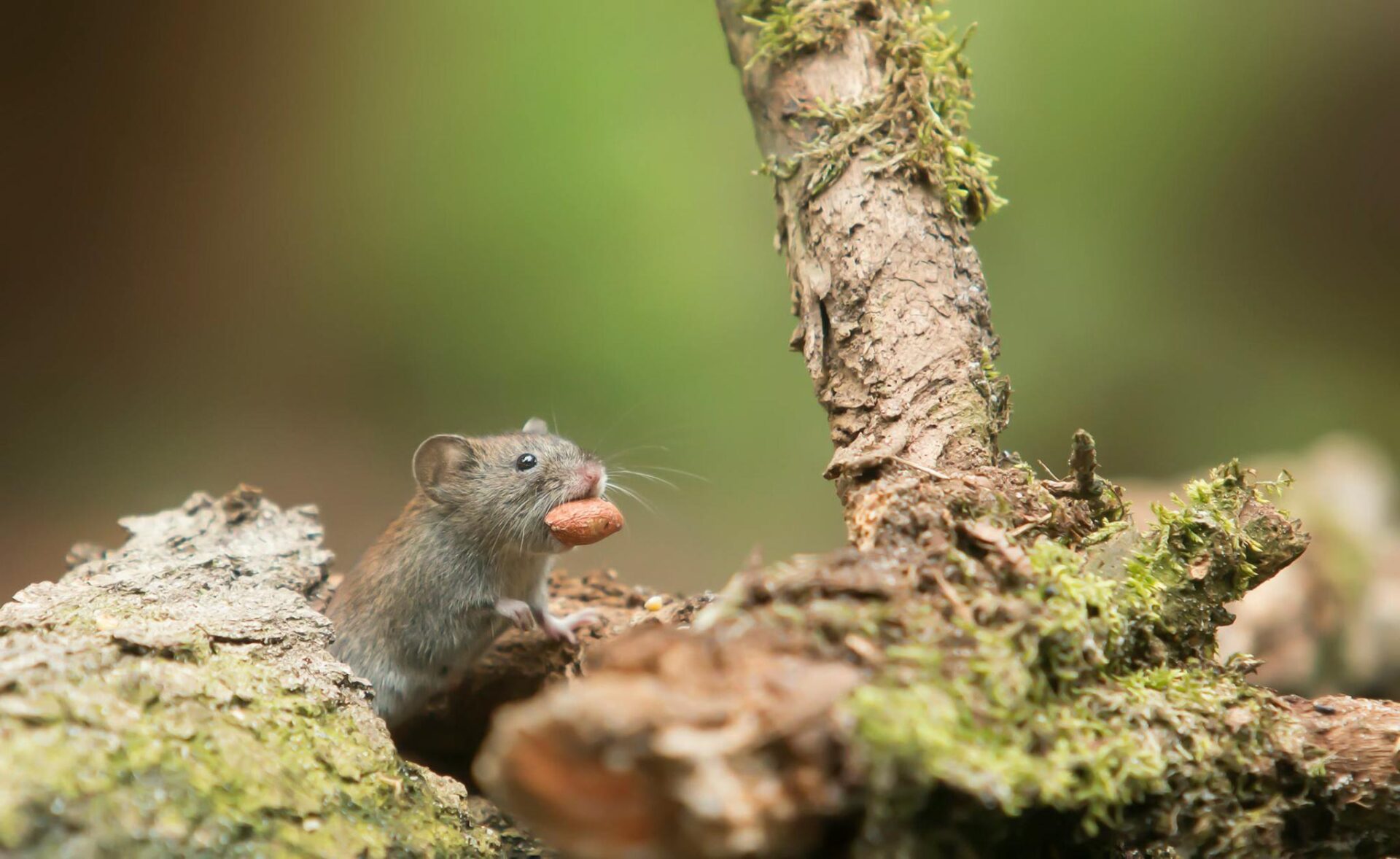
House mice are highly adaptable and often live close to humans. They nest in walls, attics, basements, and cluttered storage areas using shredded paper, fabric, or dried plant materials. They are nocturnal, agile climbers, and tend to travel the same routes along walls and behind objects, leaving behind grease smears from their fur.
Signs of a house mouse infestation include:
-
-
Small, pellet-shaped droppings (about ¼ inch long) near food sources or travel paths
-
Gnaw marks on food packaging, wires, or wood
-
Scratching or scurrying noises at night
-
Nests hidden in dark, secluded spaces
-
Tiny footprints or tail marks in dusty areas
-
Unusual pet behavior (dogs or cats detecting movement behind walls)
-
Reproduction & Life Cycle
House mice reproduce at an astonishing rate. Females can produce up to 10 or more litters per year, with each litter averaging 6–8 pups. Gestation lasts just 19–21 days, and young mice reach sexual maturity at 5–6 weeks old. Without intervention, populations can grow rapidly, leading to extensive infestations.
Diet & Adaptation
House mice are omnivorous, though they prefer seeds and grains. They will readily consume fruits, insects, and human food scraps. Their small size allows them to access nearly any food source, and they can survive on minimal amounts of food and water, which contributes to their success as a pest species.
Trapping & Control
Trapping Methods
- Snap Traps: The most effective and humane trapping option when used properly.
- Live Traps: Allow for capture and release but must be checked frequently to avoid animal stress.
- Glue Traps: Less humane and generally not recommended.
Trap Placement Tips:
-
Place traps along walls, behind appliances, and near droppings or gnaw marks.
-
Use multiple traps, spacing them 5–10 feet apart in areas of high activity.
-
Mice are cautious; avoid moving traps once placed.
Best Baits:
-
Peanut butter (sticky and highly attractive)
-
Chocolate
-
Seeds and nuts
-
Soft bread
Baiting Strategies
-
Use tamper-resistant bait stations if children or pets are present.
-
Place bait stations along walls or in known mouse paths.
-
Check bait daily, replacing stale or moldy bait.
-
Continue baiting until no new activity is observed for at least one week.
Exclusion & Prevention
-
Seal all gaps and holes larger than ¼ inch in walls and foundations
- Keep food stored in airtight containers.
- Maintain cleanliness to remove food crumbs and nesting materials.
Looking for recommendations for traps or bait? See our resource page.