
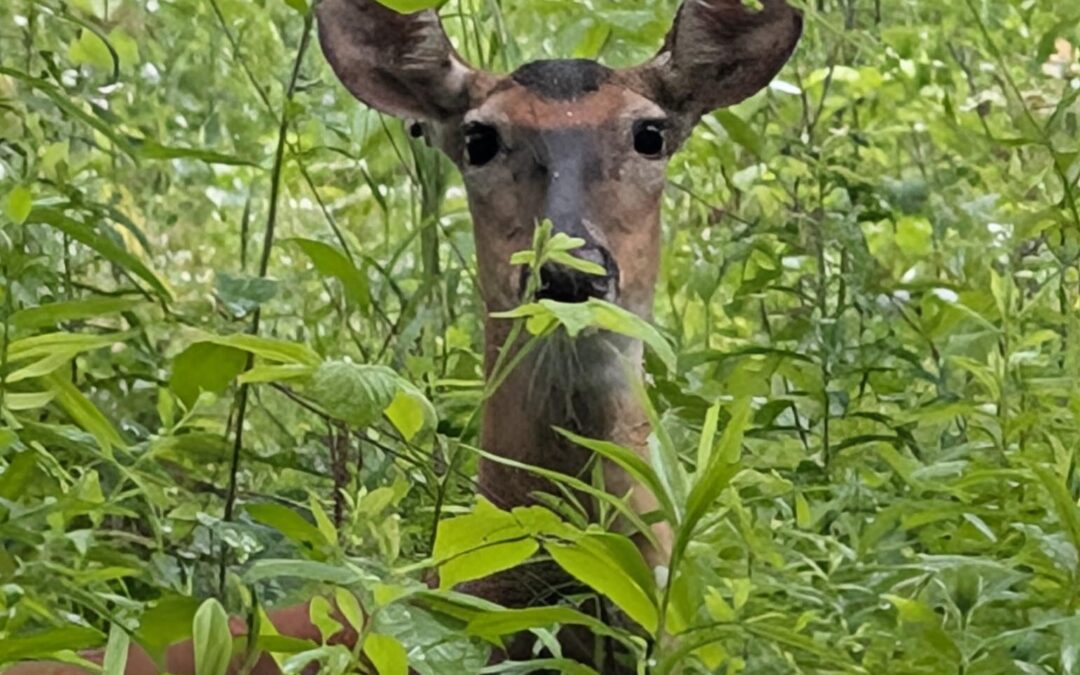
The White-tailed deer is one of the most adaptable and widespread wildlife species in Missouri. While they are often admired for their beauty, they can also become a major source of frustration for homeowners—especially in spring and early summer when gardens and flower beds suddenly start disappearing overnight.
This is the exact time of year when many people start searching for terms like “deer eating my garden,” “deer eating my flowers,” “deer yard destruction,” and “deer damage control.” The good news is that understanding deer biology—especially fawning season—can help explain the behavior and guide effective prevention and management strategies.
Gestation and Timing of Fawning Season in Missouri
In Missouri, whitetail deer typically breed in late fall (November–December). After a gestation period of about 190–200 days, does give birth in late May through June.
This timing aligns with:
- Peak plant growth and nutrition availability
- Warmer temperatures for fawn survival
- Increased food resources for lactating does
During this stage, a doe’s nutritional demand increases dramatically. She is not only supporting her own body but also producing milk for rapidly growing fawns.
That increased energy demand is one of the biggest reasons homeowners experience sudden deer yard destruction and heavy browsing pressure in landscaped areas.
Why Deer Target Flowers and Garden Plants
When homeowners report “deer eating my garden” or “deer eating my flowers,” it is often linked to late gestation, lactation, and early fawn-rearing behavior.
1. High Energy Demand from Pregnancy & Lactation
A pregnant or nursing doe requires significantly more calories, protein, and minerals. Ornamental flowers, hostas, roses, and vegetable gardens often provide highly digestible nutrients compared to natural forage.
2. Soft, High-Water Content Plants
Garden plants are easier to chew and digest than tougher native vegetation, making them highly attractive during biologically demanding periods.
3. Edge Habitat Feeding Behavior
Deer naturally prefer “edge environments”—areas where woods meet open spaces like yards and gardens. These zones offer both cover and easy access to food, especially in suburban Missouri landscapes.
Fawning Behavior: Where Does Hide Their Young
One of the most misunderstood aspects of deer biology is how does care for newborn fawns.
After giving birth, a doe does not remain constantly with her fawn. Instead, she:
- Hides the fawn in tall grass, brush, or wooded cover
- Visits only a few times per day to nurse
- Uses strong scent-control behavior to avoid attracting predators
This strategy keeps the fawn safe during its most vulnerable stage, but it also increases the doe’s movement across residential properties—often contributing to repeated garden browsing.
Early Fawn Development and Diet
Newborn fawns are extremely vulnerable and rely completely on their mother.
First Few Weeks:
- Diet: 100% mother’s milk
- Behavior: Mostly lying still and hidden
- Movement: Minimal, only short repositioning
After 2–4 Weeks:
- Begin nibbling on vegetation
- Start exploring nearby cover
- Still heavily dependent on milk
After 8–10 Weeks:
- Gradual transition to solid plant diet
- Increasing independence from the doe
During this entire period, the doe’s nutritional demands remain high, which continues to drive deer damage control issues in residential landscapes.
Why Deer Pressure Increases in Residential Areas
As natural habitat shrinks and suburban development expands, deer are increasingly pushed into residential zones. These areas often provide:
- Consistent food sources (ornamental plants, gardens)
- Reduced predator presence
- Safe bedding cover in nearby woods or brush
This combination makes residential yards ideal feeding and rearing zones during fawning season—leading to increased deer yard destruction across Missouri communities.
Deer Damage Control, Prevention, and Removal Services (Eureka, Missouri Area)
When deer pressure becomes consistent, homeowners often need more than simple deterrents. At this stage, professional support becomes a key part of long-term solutions.
Nature & Wildlife Solutions provides specialized deer damage control and prevention services within a 15-mile radius of Eureka, Missouri.
The company is led by a wildlife professional with over 40 years of animal control experience, including decades of field work, property damage resolution, and wildlife behavior management. Over the course of his career, he has also contracted with the Missouri Department of Conservation and other wildlife and government agencies, bringing extensive real-world experience to both residential and professional wildlife management situations.
Common local issues include:
- Persistent garden browsing
- Repeated flower bed destruction
- Seasonal yard damage spikes
- Fence line and property edge feeding pressure
Our approach focuses on understanding deer behavior patterns and applying practical, property-specific solutions to reduce recurring damage.
Virtual Wildlife Consultations Across the United States
Not located near Eureka, Missouri? We also offer virtual wildlife consultations nationwide.
These consultations are designed for homeowners dealing with:
- “deer eating my garden” situations
- “deer eating my flowers” damage
- recurring suburban deer pressure
- seasonal landscaping loss
During a virtual consultation, we help you:
- Identify why deer are targeting your property
- Understand seasonal behavior patterns
- Develop customized deer damage control strategies
- Recommend prevention and exclusion options
This allows homeowners anywhere in the U.S. to access professional wildlife insight without needing on-site service.
Deer Management and Prevention Strategies
Understanding deer behavior is the first step in reducing property damage. Effective deer damage control typically includes:
- Habitat modification (reducing attractants near homes)
- Strategic fencing or exclusion methods
- Repellents and deterrent systems
- Seasonal monitoring during peak fawning months
Combining these strategies helps reduce long-term deer yard destruction and protects high-value landscaping.
Learn More About Deer Biology and Control
For more detailed information on deer behavior, fawn development, and seasonal wildlife patterns in Missouri, visit:
You can also explore topics such as:
- Fawn development stages
- Seasonal deer feeding behavior
- Property protection strategies
- Wildlife conflict prevention methods
Nature & Wildlife Solutions also provides guidance on deer management tools and accessories designed to help reduce pressure on residential landscapes.
Final Thoughts
The surge in garden and flower damage during late spring and early summer is not random—it is directly tied to the biological demands of reproduction and fawn rearing in Missouri whitetail deer.
When homeowners experience issues like deer eating my garden, deer eating my flowers, or ongoing deer yard destruction, it is often a predictable seasonal pattern rather than random behavior.
With over 40 years of professional animal control experience and a career that includes contracting work with the Missouri Department of Conservation and other agencies, Nature & Wildlife Solutions brings real-world wildlife management insight to every consultation.
By combining deer biology knowledge with professional deer damage control strategies—whether locally in Eureka, Missouri or through virtual consultation anywhere in the U.S.—homeowners can significantly reduce long-term property damage and regain control of their landscapes.